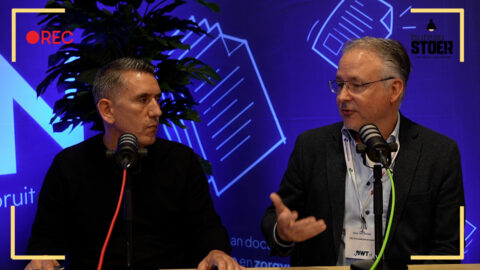
During a roundtable discussion in the House of Representatives on making the built environment more sustainable, builders, municipalities, installers, housing corporations and banks were given the opportunity to share their views on the cabinet's ambitions.
These ambitions were broadly shared, but there was also the warning that implementation is becoming increasingly difficult, time-consuming and expensive.
Construction task clashes with full electricity grid
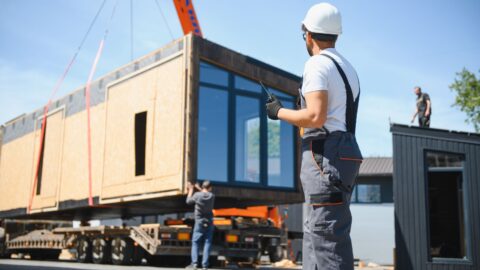
The Netherlands faces a huge construction and renovation challenge. The construction sector is working to make some 8.3 million homes and over 1 million utility buildings more sustainable, while at the same time about 100,000 new homes need to be built each year.
Electrification plays a central role, but the electricity grid can barely keep up with the pace. New rules for the distribution of grid capacity also make it uncertain, according to municipalities, whether housing projects can be connected in time. According to the sector, a situation is looming in which housing construction, renovation and electrification will compete for scarce grid capacity.
Tanja de Jonge, alderman in Dordrecht on behalf of the G40 municipalities, warned that this could put projects on waiting lists. "We very much want to build, we need to build, but this is really going to hinder," she said. "Our housing projects could end up on a waiting list."
Grid-conscious building as a solution, with connection guarantees
During the discussion, builders and grid managers jointly advocated a solution: grid-conscious building. This involves designing homes so that the peak load on the grid is reduced, for example through smart energy management systems and hybrid heat pumps. But there is a condition for this, in the form of a connection guarantee to the grid.
According to Jelmer Alberts of Bouwend Nederland, this could reduce the peak load in new construction by about 20 percent. "The technology is there and the builders are ready," Alberts said. But in return, he said, there is a condition. "If we can trade a connection guarantee for grid-aware new construction, I think we can do good business together." Grid-conscious measures cost an average of about 15,000 euros extra per home, according to the industry. Without certainty of connection, builders say that risk becomes too great.
Netbeheer Nederland also sees grid-aware construction as a necessary part of the energy transition. "Make grid-aware new construction the norm," said Hans-Peter Oskam on behalf of the organization. According to him, a new grid tariff system can also help in this regard. That should encourage households to better spread their electricity use. "60 percent of households will be cheaper as a result," he expects.
ING Netherlands: clear goals work
The financial sector also sees opportunities to accelerate sustainability, provided the government sets clear goals. According to Peter Jacobs, CEO of ING Netherlands, many homeowners are willing to invest. "74 percent of homeowners cite cost savings as the main motivation to make their homes more sustainable," he said.
ING sees that the majority of households can finance the investments. "95 percent of Dutch households are able to finance this sustainability themselves through savings or a mortgage," Jacobs said, although he stressed that this does not apply to vulnerable groups.
According to the bank, a clear standard from the government can get the market moving. ING cites a possible standard for homes, for example energy label C in 2030, as an example of such a clear goal. Jacobs referred to the obligation for offices to have at least energy label C. "If you want to influence the market, it's best to put a stick in the ground somewhere. Then you'll see that that market will move by itself."
Heat networks and financing
According to several speakers, there is a lack of sufficient funding and clarity. Bouwend Nederland sees the coalition agreement as a step in the right direction, but feels that resources are still lacking. "The coalition agreement looks good, but there is no money yet," Alberts said.
Besides electrification, heat networks are seen as an important alternative to relieve the electricity grid. But their rollout is proceeding with difficulty. Housing associations also see this unruly practice. According to Liesbeth Spies, president of trade association Aedes, heat network projects regularly fail because of the high costs.
At the same time, housing corporations are already investing heavily in sustainability. Every year, according to Spies, more than 12 billion euros are spent on maintenance and making homes more sustainable. That is now more than the annual rental income. "We can keep that up for a few years," Spies said. "But we soon run into the limits of the investment space."
Practice clashes with policy
In addition to major infrastructure issues, the feasibility of policy also plays a role. Several participants in the debate pointed out that regulations and subsidies do not always mesh well with practice.
Thomas Pijssens of Techniek Nederland mentioned, for example, the subsidy scheme for sustainability. According to him, this often works as a barrier, because residents must first invest before receiving compensation. "First pay and then compensation. In practice, we see that many residents have difficulty with that."
In addition, according to installers, simple energy-saving measures receive too little attention. Pijssens mentioned water-side adjustment of heating systems as a relatively simple intervention that he believes can save up to 10 to 30 percent of gas. "That is the forgotten vegetable of the energy transition," he said. According to Techniek Nederland, about 80 percent of homes are not yet optimized that way.
Ambition widely shared
The ambition to make the built environment more sustainable was not up for discussion in the roundtable discussion. Almost everyone agreed: less fossil, more electricity and more energy savings. But the discussion also showed that implementation is becoming increasingly complicated.
Without a faster expanding electricity grid, clearer policies and more feasible regulations, the energy transition in the built environment is at risk of getting bogged down in procedures, rules and capacity problems. The message from the sector to The Hague was therefore clear: the ambitions are there, now the implementation, supported by clear and decisive policy.