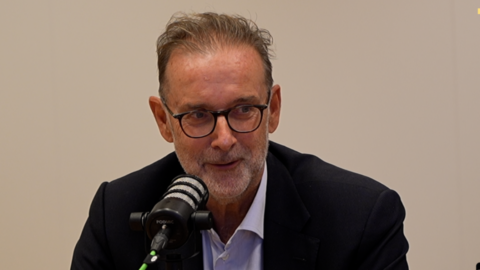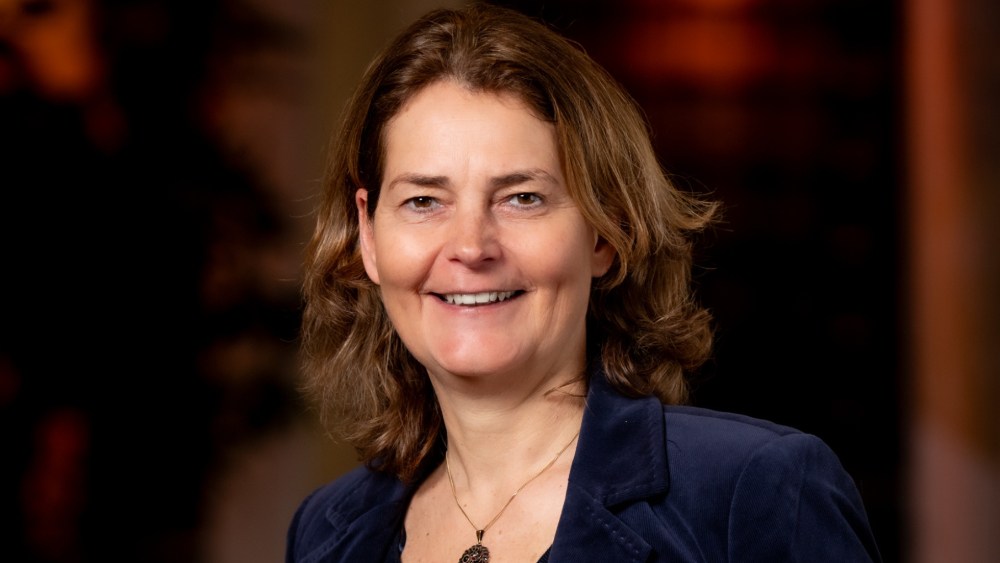
“You can see the love for bricks reflected in the entries.”, says Miranda Aarnoudse, commercial director of Wienerberger Netherlands. ““Brick is a traditional building material, but when used in a well-designed project, it can look contemporary and modern.”
It was incredibly exciting once again. Out of the 849 projects submitted—including 61 from the Netherlands—an independent jury nominated fifty. The 2026 Brick Award ultimately had five winners in five categories.
Miranda, you just got back from Vienna, where the awards were presented. How was it?
“An amazing experience! The energy was electric on stage. It was my first time attending. I’d heard a lot about it, but it exceeded all my expectations. So many entries, such beautiful projects! If that doesn’t make you happy, I don’t know what will. What mortar is to a brick wall, this competition is to the world of architecture. It’s all about connection. You could really feel that during the event.”
What is the significance of the Brick Award?
“Think of it as a platform where architects can showcase exceptional ceramic architecture. The Brick Award was launched in 2004 by Wienerberger to demonstrate just how surprising, unique, and timeless ceramic architecture can be. The number of entries has risen significantly since that first edition and now stands at 849. This indicates that there is international interest in this biennial competition. I expect the number of entries to well exceed one thousand by 2028.”
Is the Brick Award all about bricks?
“That is indeed the foundation of Wienerberger, but the scope has since become much broader. It’s about building solutions using bricks and ceramic roof tiles, but just as much about creative applications with paving bricks and ceramic facade panels. Ceramics can be applied in all sorts of ways in the built environment. That’s exactly what makes this competition so interesting.”
What criteria does the jury use?
“It’s quite a task to judge so many entries. The jury consists of architects who evaluate the work of all their colleagues. In doing so, they look at innovative design, the unique use of ceramics, and the functionality and sustainability of the projects. People often think that only projects built with Wienerberger bricks or ceramics are eligible, but that’s not the case. Every entry counts, as long as it incorporates bricks.”
Which of the five winners surprised you the most?
“That’s the warehouse and offices of the Clase Azul La Hacienda tequila distillery in Jalisco, Mexico. The Mexican architecture firm Atelier Ars was commissioned to design an industrial building next to the existing office building, featuring offices, a bottling plant, a laboratory, storage space, and other functional areas. The new building is constructed from locally produced bricks. Thanks to the warm, earthy tones of the bricks and the shape of the structure, it seems to rise organically from the ground. It looks incredibly cool and is also highly functional. That balance is fantastic.”
There was no Dutch winner this year, but could you highlight a particularly noteworthy Dutch project that was nominated?
“For me, the Performing Arts Center at Brighton College in Brighton (United Kingdom) really stands out. It was designed by krft architecture studio in Amsterdam, one of the many Dutch architects who also work internationally. The Center is a large building with a floor area of 3,400 m², but the light-colored bricks and curved lines give it a playful and airy feel. Moreover, it’s a passive design with a BREEAM Excellent certification. The area surrounding the new building features numerous historic buildings full of character, and this project fits in surprisingly well with them. It is a highly successful design in many respects.”
I understand that the Brick Book, which is published after each competition, is a collector’s item?
“Haha, yes, that’s right. The Brick Book provides detailed descriptions of the projects by the fifty nominees. We often see the book on architects’ shelves when we’re on site, and frequently there are even multiple editions lined up next to each other. It’s an inspiring and beautifully published reference work that provides insight into the evolution of brick and ceramic use worldwide.”
In the Netherlands, there’s increasing talk of wood construction. Is brick still alive and well here?
“Absolutely. For this edition of the Brick Award, 61 Dutch participants submitted projects, seven of which were nominated. That’s a good number. It shows that inspiring buildings are being constructed in our country. And if you take a close look at those 61 entries, you’ll see the love for brick reflected in them. Brick is a traditional building material, but in a good design, it can look contemporary and modern. Moreover, it has more than proven its structural value. There are examples of centuries-old brick-built structures all over the Netherlands—and worldwide. I say: brick is timeless.”
What trends do you see emerging around brick?
“People are increasingly looking for combinations, with brick and timber-frame construction being a popular choice. I don’t have a clear picture of how that played out in the submissions, but I’m sure there were projects with a timber-frame substructure. Brick and bio-based materials go together very well. Where brick forms a good outer shell, for example, you can insulate beautifully with a bio-based product. In renovation or new construction projects, I’m also seeing more and more examples of exceptional masonry—true craftsmanship—and that gives me great pleasure.”
What does the future hold for the brick?
“I’m very optimistic about it. For a while, the brick was labeled ‘old-fashioned,’ but architects and contractors alike are changing their minds. It’s a very versatile building material that fits perfectly into all kinds of styles, including hypermodern architecture. The Brick Award demonstrates this, but if you look around the Netherlands, you’ll see brick everywhere—even in new construction. The construction demand in the Netherlands is high, and apartment complexes are being planned on a large scale. Brick is particularly well-suited for those tall(er) buildings because once it’s up, it’s there to stay. It’s strong and requires no maintenance. When it comes to brick production, there are some challenges—and of course I’m referring to emissions. As an industry, we’re very aware of this, and we’re working hard to make our processes greener.”