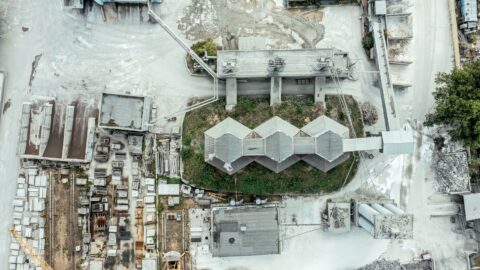
The Holiday Inn in Eindhoven is in danger of being demolished. That’s a real blow to Ronald Rovers.
Knowing how scarce raw materials are, knowing how polluting the extraction of many raw materials is, knowing how much energy goes into processing raw materials, knowing that many people are forced to work in degrading conditions to produce those raw materials, and knowing that many certified materials are counterfeit, I believe it is rightly criminal to continue demolishing and tearing down good buildings and then replacing them with buildings that require significantly more materials and cause a greater environmental impact than alternatives that serve the same function. A double mistake.
When will it finally sink in that demolition is no longer an option, that it’s an assault on our physical capacity? The idea that you can tear something down and build something new is arrogant—it’s like saying, “After me, the deluge.”
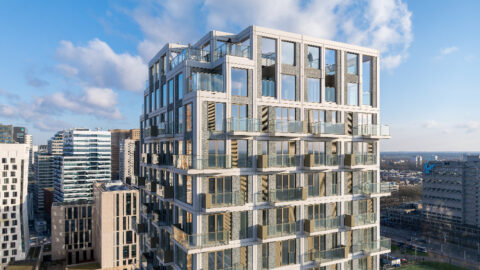
The construction industry is already responsible for 40 percent of raw material depletion and 40 percent of CO2 emissions. So how can anyone even think of demolishing a building—or, as a municipality, allowing it—especially when the municipality has sustainable policy goals? Take, for example, the plans to demolish the Ministry of Social Affairs building in The Hague. Or the plans in Eindhoven, where a developer is being granted permission to demolish a sound building and replace it with structures that completely disregard the environment and climate: north of the train station, the Holiday Inn is at risk of being torn down.
You might think a building is only meant to last a certain amount of time? Technically speaking, that’s nonsense. Buildings—of any kind—can last for hundreds of years if they’re well-designed and properly maintained. Just think of the many half-timbered houses that are hundreds of years old, found in places like Limburg and Germany, including larger ones with 4 to 5 stories. And building any higher doesn’t make sense—see my previous column for more on that.
If a building is structurally sound, it can be repurposed for a different use. And yes, sometimes you’ll have to make some compromises. “Yes, but there aren’t enough square meters for a business case,” is the usual response. Well, take that Holiday Inn, for example—there’s plenty of space around it to transform it into an urban environment with smart design. They’re only giving it their best shot once. Among the larger cities in the Netherlands, Eindhoven has the lowest population density. So there are plenty of options; there’s no need to tear anything down. Because demolition is disastrous—not just physically, but socially as well: generally speaking, the world has developed around a building; networks and structures have emerged; everything has adapted and fitted in.
And why would you destroy a valuable asset? Just to make more money? Because I can’t think of any other reason. And even if it’s not worth much on the market but is still structurally sound, it would be a bargain for the city to convert it into starter studios, for example. Or student housing. After all, the building is practically right next to the university.
Knowing—as stated in the Emissions GAP report —that over the past decade we have already processed ten times as many raw materials as we did in the entire 20th century, with the corresponding energy consumption and other impacts—the demolition of a sound building can be viewed as a criminal act, a crime against humanity, an action that accelerates the depletion of raw materials, and bringing the world closer to the brink.